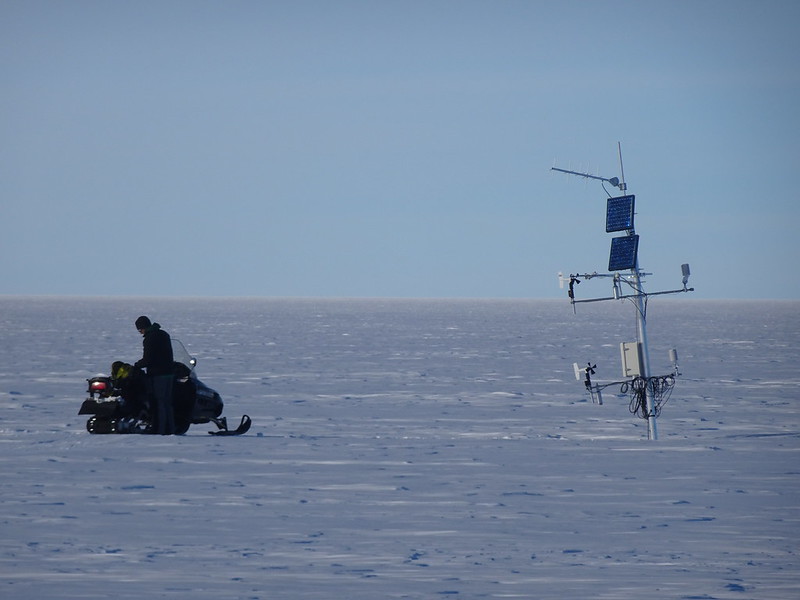
FirnCoVer 2017: Snowmobile traverse on the ice sheet to investigate the Greenland ice sheet firn layer
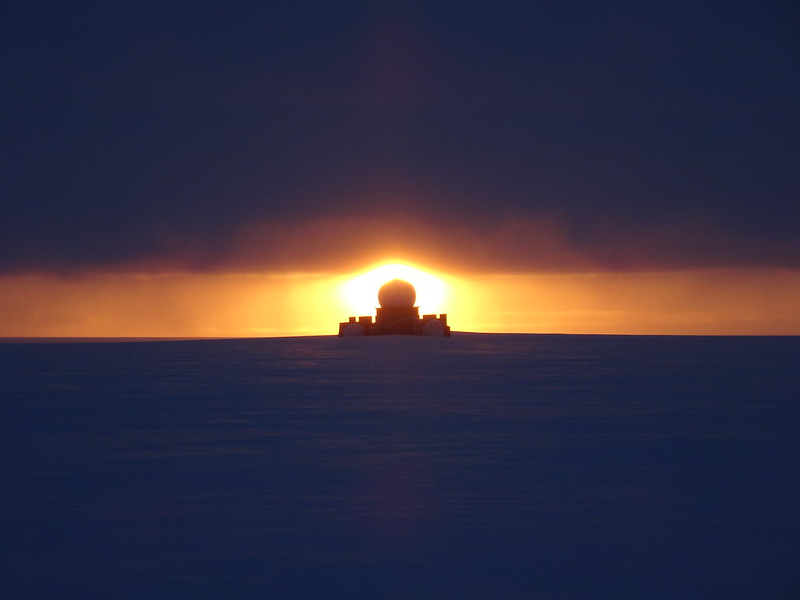
This fieldwork was my second field season on the Greenland ice sheet with the FirnCover project, and it built directly on the momentum of the year before. We started in April, gathering in Kangerlussuaq to prep gear and load skidoos, fuel drums, science equipment, and weeks’ worth of supplies. After a few days of sorting and staging, we flew by LC-126 to Camp Raven (DYE-2), where the real work began.
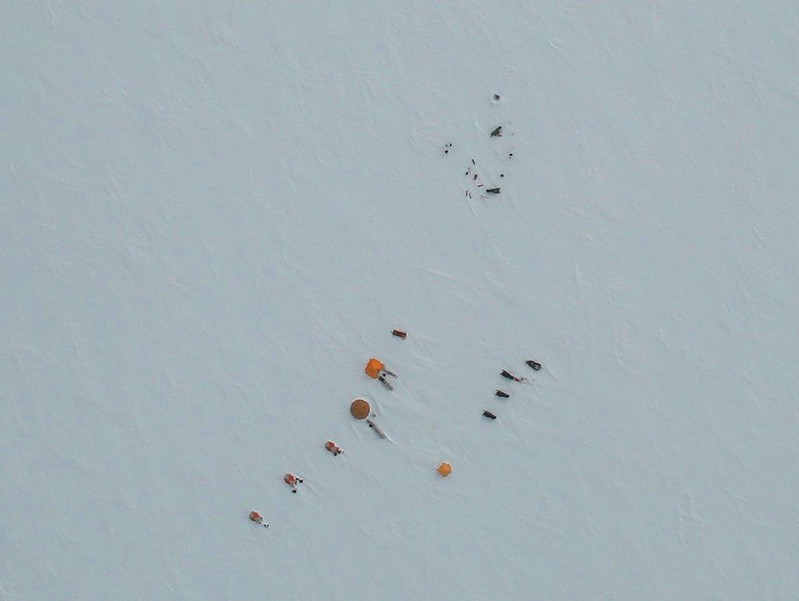
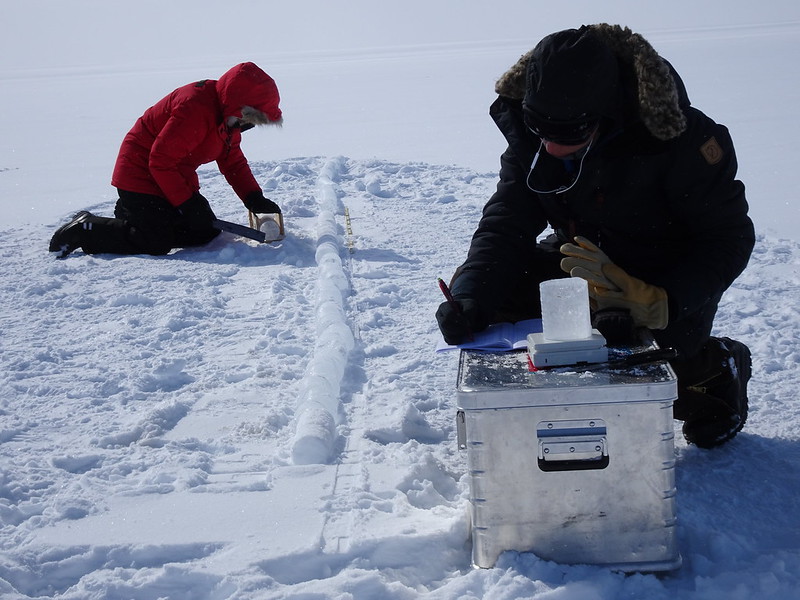
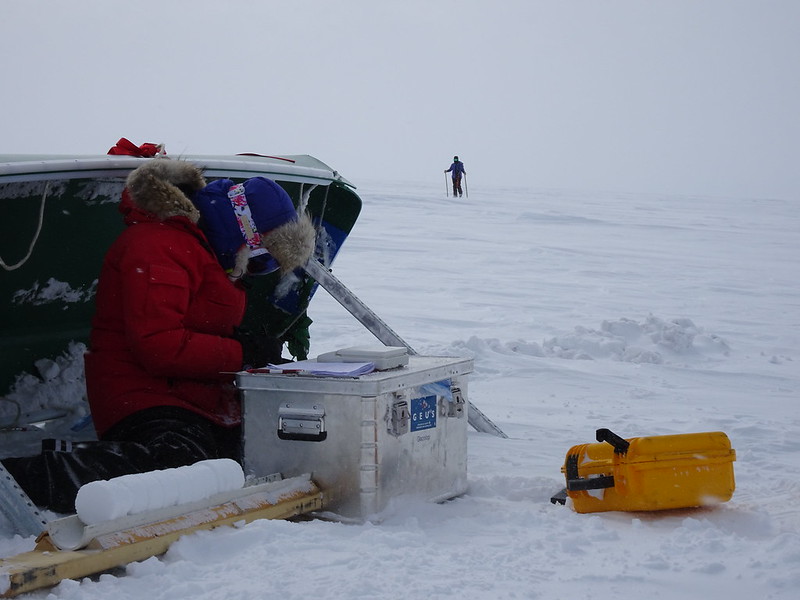
From DYE-2, we launched a major traverse across southern Greenland by snowmobile, covering over 600 kilometers round-trip. Our targets were a series of firn monitoring sites including EKT and KAN-U. At each stop, we drilled firn cores, serviced GPS compaction stations, and collected snow samples. The terrain was rough, with deep sastrugi slowing progress and occasionally flipping sleds. Some days stretched past 12 hours in the cold, with hands freezing to metal coring rods despite gloves.
Midway through the campaign, a mechanical failure on one of the skidoos forced a major delay—we had to cannibalize parts from backup equipment and spent a full day in the snow wrenching the machine back into operation. Weather also threw us a curveball: a whiteout near KAN-U forced us to pitch camp early and wait out the storm, packed four into a tent with drifting snow piling up outside.
Despite the setbacks, the team moved efficiently and morale stayed high. Once the southern traverse was complete, we wrapped up the campaign with additional work at DYE-2 before flying out. The fieldwork deepened my understanding of the firn processes we were measuring—and further cemented my dedication to this kind of science. We didn’t just gather great data that year, we proved we could operate as a tight, resilient team under Greenland’s most challenging conditions.